
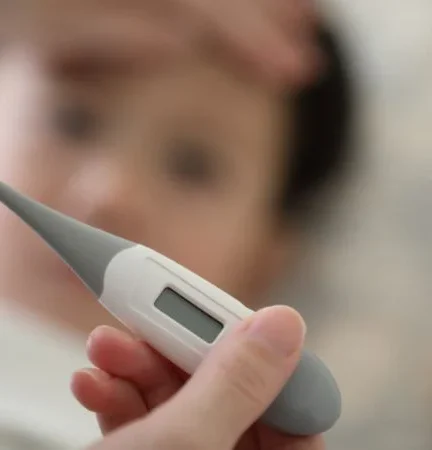
Feeling your child burning up can be one of the most concerning moments you can experience in parenthood, it could be your first time dealing with a fever or even if you’ve been through it before. Learning what is infant fever temperature can make a huge difference on how you’re going to respond to your child’s symptoms. Fevers could happen for a lot of reasons, from viral infections to teething pains, this is why understanding what’s normal, what you need to watch out for, and when you should be calling your doctor will allow you to take the proper steps along the way and have a peace of mind.
In these challenging times especially when your child isn’t feeling like themselves, our first response is to provide them as much comfort as possible. And in keeping them close in a wrap or toddler carrier we can ease their discomfort while monitoring their temperature.
As parents, being knowledgeable enough in learning the reasons behind the cause of fever can be really helpful, alongside knowing how to properly take your child’s temperature. In this article, we’ll be discussing everything you should know about what is infant fever temperature, how you may treat it safely, and some extra tips on how you could make your little ones feel as comfortable as possible.

The Magic Number: Defining an Infant Fever
Common mistakes that parents do is that whenever they feel their child is warm to touch, they easily assume that their child have fever, but this isn’t the case. For doctors, the temperature that they consider as fever is higher or 100.4°F (38°C) in rectal temperature, now a slight increase in your child’s temperature can only mean one thing, their immune system is fighting off an infection.
Many might not know this, but a mild fever is usually harmless and is a part of your child’s immune response. These mild fevers helps them build their immunity as it develops and matures. Now for babies under 3 months old, it’s a different case, since their immune system is still underdeveloped, any persistent increase in their temperature should be taken very seriously. Keeping notes of your child’s temperature and other possible symptoms can be very helpful for your pediatrician, this makes the assessment easier and defining whether further evaluation and what kind of treatment is necessary in their case.
Age Is Crucial: When to Call the Pediatrician Immediately
A child’s age is a considerable factor in determining whether their fever is “call a doctor” serious or “we can manage this at home”
- Below 3 months old – 100.4°F (38°C) or higher temperature, you should call your doctor immediately.
- 3 to 6 months – 102°F (38.9°C) or higher, persistent for more than 24 hours, should also be consulted with the doctor.
- 6 to 12 months of age, usually manageable at home. If they have enough fluids and generally, normal it’s fine to keep them at home but make sure to encourage them to rest plenty.
Any doubts or uncertainties you’re feeling, you can always consult with your pediatrician and keep them on the loop.
The Gold Standard: Why Rectal Temperature is Key
As parents you want the best for your child and when you’re learning what is infant fever temperature, you’re definitely going to try all kinds of methods to get the most accurate measurement of your child’s temperature. Commonly what’s used for infants under 12 months, is the rectal thermometer. This method is considered the golden standard when taking the most accurate temperature.
Thinking about it, taking rectal temperature can pretty much be intimidating at first, but it’s usually very simple and safe if you’re doing it correctly. You might be wondering how you could do this? Remember to be as gentle as possible. Slowly insert the thermometer’s tip lubricated with petroleum jelly, half an inch into your baby’s rectum, then wait for the reading. Simple as 1, 2, and 3.
The rectal reading gives the most reliable measurement of your child’s core body temperature. When your child is under 3 months getting the most accurate one, is very crucial as this determines whether you’ll need to consult with your doctor.
How to Measure: Choosing the Right Thermometer
Thermometers, depending on how they are built and used, aren’t all the same. For example, digital thermometers, they are ideal to be used for newborns and infants since they are easy to use, quick readings and free of mercury. There are also some models that are designed specifically for rectal readings, these are the ones with the flexible tips.
Avoid ear thermometers for very young babies as their ear canals are still too small to get an accurate reading. In the same sense, oral thermometer should only be used when your child is old enough to safely hold one under their tongue.
Understanding Other Methods (Axillary and Temporal)
If you’re exploring other alternatives of determining what is infant fever temperature, the most common ones are axillary (underarm) and temporal (forehead) readings.
Readings taken from their armpits or the ones that scans their forehead are usually more convenient and quicker, but it’s less accurate than the rectal readings, they may also underestimate a fever, usually when the room temperature fluctuates or your baby is too bundled up. Although this is the case, thermometers used for armpits and the ones that scans the temperature through the forehead, are especially helpful in fussy babies and toddlers.
If you’re getting an unusually high or low readings using these methods, you could always double check using a rectal thermometer.
Fever Reducers: Knowing When and How Much to Give
Now since you have the overall idea of what is infant fever temperature, we’ll be proceeding with the next question of whether you should be giving your child medication or not.
The acetaminophen (Tylenol) is generally safe for babies over 2 months, while ibuprofen (Motrin or Advil) can be used for children over 6 months, but just a reminder, make sure to follow your pediatrician’s dosage prescription based on their weight.
There are also times when medication isn’t always necessary. If your baby is very active, still feeding well, and doesn’t seem to be uncomfortable, refrain from medicating them. Your goal here isn’t to eliminate the fever but to keep your child comfortable while their body fights off the infection.
Simple Comfort: Non-Medication Ways to Help
Your child having a fever can put you to the edge, but before jumping into giving medications, you can try other remedies that provides comfort for your baby through a fever.
- Keep your baby in light, breathable clothes
- Set the room temperature at around 70–72°F (21–22°C)
- Hydrated well, you can offer them plenty of fluids
- A lukewarm sponge bath can also help to cool them down if their fever is high
- Avoid alcohol rubs or cold baths, they can cause shivering and increase body temperature
Skin-to-skin contact or holding them in a toddler carrier can be soothing and comforting especially when they are feeling a bit under the weather due to the fever.
Beyond the Fever: What Is a Normal Baby Temperature?
To get the whole picture, knowing what temperature is normal and what’s not is essential. For most healthy babies, the normal body temperature ranges between 97°F (36.1°C) and 100.3°F (37.9°C). If you noticed some fluctuations throughout the day, it’s completely normal. A child’s temperature can rise after feedings, plays, or sometimes because of overdressing. Seeing the patterns and considering other factors that affects their health gives you a better grasp of their current condition.
When to See a Doctor
Immediately reach out to your pediatrician if you noticed:
- A fever of 100.4°F (38°C) or higher in babies under 3 months
- Persistent fever for 3 days
- They looked tired and no energy at all
- May have trouble breathing
- They are showing signs of dehydration
- develops any kind of rash, stiff neck or seizures
Conclusion
Learning all about what is infant fever temperature helps as guide to parents in providing the best care for the most common health issue in babies. Looking at the brighter side of things, fevers are signs that your child’s body and immune system is fighting off the infection and doing a hard work. Although fevers usually take it course and fades on its own but it’s also worth knowing when to take action, keep a close eye on and seek immediate help is crucial.
With the right thermometer and proper ways of keeping your little one comfortable you are ensuring that they will go through this smoothly and as gentle as possible. Holding them during these moments helps reassure them that even when they aren’t in the best shape and at their most vulnerable, you are always with them.