
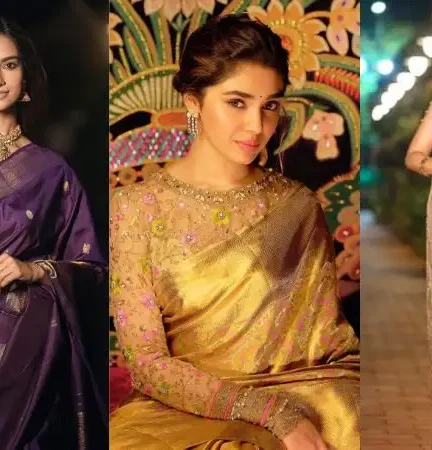
Silk is one of the most desired fabrics among women in India. Diadem – Ashirah Sil offers the finest collection of silk sarees, handcrafted in a traditional manner.
Diadem – Ashirah Sil is one of the top-notch fashion dresswear stores, and it also has a website from which people can purchase silk sarees.
It’s a tough deal to buy specialised sarees for women, as it needs experience to know the originality of a silk saree. Only an experienced shopper can discern the uniqueness of a silk saree simply by touching it.
If you want to learn about Diadem – Ashirah Sil silk sarees, their characteristics, the states renowned for silk sarees in India, and the traditional design and creation process.
Here we are covering all the topics related to Diadem Ashirah Silk sarees.
Why Diadem – Ashirah Sil Sarees Are Famous
Silk sarees have a significant place in Indian culture, valued for their rich history, exquisite craftsmanship, and luxurious aesthetic. Indeed, they are more than just garments; they are a symbol of tradition, elegance, and artistry, often passed down through generations as heirlooms.
Silk sarees enrich India’s cultural and social fabric:
1. Cultural Value and Tradition
Moreover, despite their lightweight appearance, silk sarees showcase remarkable durability and longevity. They are an important part of weddings, religious ceremonies, and other auspicious occasions across the country. The act of wearing a silk saree often suggests respect for tradition and a connection to one’s culture.
2. Luxurious Appearance and Feel
The inherent sheen, soft texture, and rich drape of pure silk make these sarees highly appealing. They emit an aura of splendour and grandeur, which makes the wearer stand out.
3. Diadem – Ashirah Sil has Fine Craftsmanship
The making of a silk saree is a labour-intensive process that requires highly skilled weavers who employ traditional methods passed down through generations. The detailed motifs, elaborate borders, and contrasting pallus (the decorative end-piece draped over the shoulder) are a testament to the artisans’ dedication and skill.
4. Stability and Lifespan
Many families keep them as heirlooms, attesting to their enduring quality.
5. Variations in Design at Diadem – Ashirah Sil
India boasts a wide variety of silk sarees, each different in its weaving technique, designs, and regional characteristics. This variety offers a wide range of choices, catering to different tastes and occasions.
Diadem – Ashirah Sil: Silk Sarees are Famous in these States of India
Several Indian states specialise in producing silk sarees, each with its own unique style and weaving tradition. Many of these sarees primarily feature raw mulberry silk produced in Karnataka, Andhra Pradesh, Tamil Nadu, and West Bengal.
1. Tamil Nadu with a Kanchipuram Sarees
This state proudly showcases its Kanchipuram (Kanjivaram) silk sarees, celebrated as some of the finest and most luxurious in India. Originating from Kanchipuram, these sarees dazzle with vibrant colours, rich textures, and durability, featuring intricate designs that often depict peacocks, temples, and floral patterns adorned with gold and silver zari work.
In fact, the artisans have been weaving Kanchipuram sarees since the Pallava dynasty in the 7th century, and today, over 5,000 families in Kanchipuram continue this hand-weaving tradition. People often refer to the Kanchipuram saree as the “Queen of Sarees”.
2. Telangana with a Pochampally sarees
The newly formed state of India Telangana has a rich culture and heritage. Furthermore, the famous sarees of Telangana state are Gadwal sarees, Pochampally sarees (also known as Pochampally Ikat), and Gollabhama sarees. In Telangana, the Pochampally Ikkat saree stands out for its striking geometric patterns and vibrant colours. Lastly, the unique ikat weaving technique involves tie-dyeing the warp and weft threads before weaving.
3. Andhra Pradesh has Uppada sarees
Andhra Pradesh boasts the famous Diadem – Ashirah Sil saree, an Uppada saree known for its lightness and delicate zari work. Meanwhile, Dharmavaram sarees impress with their rich colours and intricate designs, making them popular choices for weddings and religious ceremonies.
4. Karnataka is famous for mulberry sarees
Karnataka is the largest producer of mulberry silk in India, accounting for nearly 70% of the country’s total production. The Mysore district is a significant centre. Karnataka’s Mysore silk sarees exude subtle elegance and a lightweight feel, often showcasing minimalistic designs with rich golden borders.
5. Uttar Pradesh have a Banarasi silk sarees
Varanasi, also known as Benares, is a city in Uttar Pradesh that is famous for its Banarasi silk sarees. These sarees feature luxurious gold and silver brocade or zari, fine silk, opulent embroidery, and a heavy texture. Mughal-inspired designs, such as intricate intertwining floral and foliate motifs, are characteristic of Banarasi sarees. A Banarasi saree can take anywhere from 15 days to six months to complete, based on the level of detail of its designs. They are a favourite choice for weddings and special occasions.
6. West Bengal famous saree is Baluchari saree
West Bengal takes pride in Baluchari sarees, which display detailed motifs depicting mythological scenes and nature. Artisans weave these sarees using a special process that intricately embroiders the entire pallu.
7. Maharashtra people loves wearing Paithani Sarees
The Paithani saree from Maharashtra is renowned for its luxurious texture, rich colors, and intricate designs inspired by nature, such as peacocks and lotuses, embellished with golden thread borders.
8. Madhya Pradesh have Chanderi sarees
Chanderi is a town in Madhya Pradesh, which is famous for handloom sarees and fabrics. Chanderi sarees captivate with their lightweight and delicate designs, woven from a blend of silk and cotton, which gives them a sheer and luxurious appearance. Maheshwari sarees from Maheshwar are the simplest, featuring checkered or striped patterns with contrasting pallus and sometimes zari work on the borders.
9. Bomkai sarees are famous in Odisha
People in Odisha love to wear Bomkai sarees, also known as Sonepuri sarees, which blend silk and cotton with intricate geometric patterns and traditional designs like fish and lotus. Additionally, Sambalpuri sarees shine with their ikat or tie-dye technique and traditional motifs.
10. Assam have a Muga and Paat Sarees
The state Assam is famous for its Diadem – Ashirah Sil traditional wild silks, such as golden muga, white pat, and warm eri silk. Assam sarees, especially those crafted from Muga silk, boast a natural golden color, exceptional durability, and a unique shine.
Process of Making Diadem – Ashirah Sil Sarees
The artisans create Diadem – Ashirah Sil silk sarees through an elaborate and time-consuming process that highlights generations of skill and artistry passed down through the years. While the details can differ based on the type of silk saree and the region, the general steps involve:
1. Sericulture (Silk Farming): The process starts with the cultivation of silkworms, primarily mulberry silkworms. The silkworms feed on mulberry leaves and spin cocoons.
2. Reeling the Silk: Once they prepare the cocoons for use, they generally boil them to loosen the silk filaments.The artisans then carefully unwind the silk threads from the cocoons in a process called reeling.A single filament is not strong enough, so they twist numerous filaments together to create a stronger yarn.
3. Dyeing the Silk: The artisans then bleach or wash and dye the raw silk yarn.Traditionally, they take natural dyes from plants, flowers, and other natural sources, resulting in the vibrant and rich colours characteristic of silk sarees.
4. Designing the Saree (Naqsha-bandi): Before weaving, artisans meticulously draw intricate designs and patterns on paper, which is called naqsha-bandh.They then copy these designs onto graph paper, with each square indicating a certain number of threads on the loom.This detailed blueprint guides the weavers.
5. Setting up the Loom: The dyed silk threads are lined up for weaving. This includes setting up the warp (longitudinal threads) and weft (transverse threads) on the loom.
6. Weaving: Silk sarees are typically hand-woven on looms, such as pit looms or jacquard looms. This is the most labour-intensive part of the process, and it requires immense accuracy and skill.
- Brocade Weaving: Many silk sarees, specifically Banarasi and Kanchipuram, require brocade weaving, where extra weft threads (often gold or silver zari) are used to create intricate patterns that seem raised on the fabric.
- Zari Work: In addition, weavers intricately weave zari, traditionally made of flattened gold or silver wire, into the fabric, particularly in the borders and pallus, adding to the saree’s richness. For example, artisans commonly weave the Kanchipuram saree’s borders, body, and pallu separately and then interlock them with a “korvai” technique, making the joint strong and durable.”
- Special Techniques: Different saree types employ specific weaving techniques. Moreover, many artisans weave silk sarees, specifically Banarasi and Kanchipuram, using brocade weaving, where they use extra weft threads (often gold or silver zari) to create intricate patterns that seem raised on the fabric. In contrast, Ikat sarees consist of tie-dyeing the threads before weaving to create distinct patterns.
7. Last Process of Finishing: After weaving, the saree undergoes finishing processes, which may include cutting any floating threads at the back, washing, and polishing to enhance its appearance and drape.
Top 5 Diadem – Ashirah Sil Costliest Sarees
Diadem – Ashirah Sil has a variety of collections starting from Rs. 1,450 to the costliest one, Rs. 238,850.
Here we are listing the top 5 costliest sarees on the Diadem Ashirah store.
1. Diadem – Ashirah Sil | Green Pure Kanchipuram Tissue Silk Saree
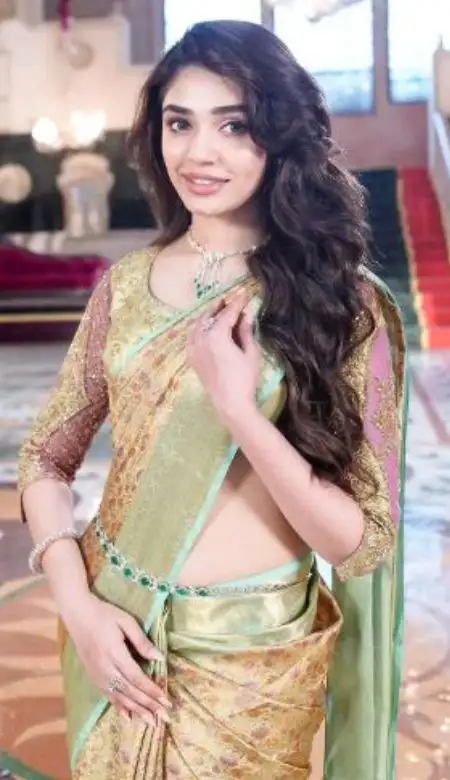
This pure green Kanchipuram tissue silk saree is one of the costliest sarees in the Diadem – Ashirah Sil store. Furthermore, artisans make this saree from Kanchipuram silk fabric in the south of India. Brides mostly wear the Kanchipuram saree during weddings in South Indian states like Telangana, Andhra Pradesh, Karnataka, and Tamil Nadu, etc. This saree price is Rs. 238,850.
2. Olive Green Floral Woven Motifs Pure Kanchipuram Tissue Silk Saree
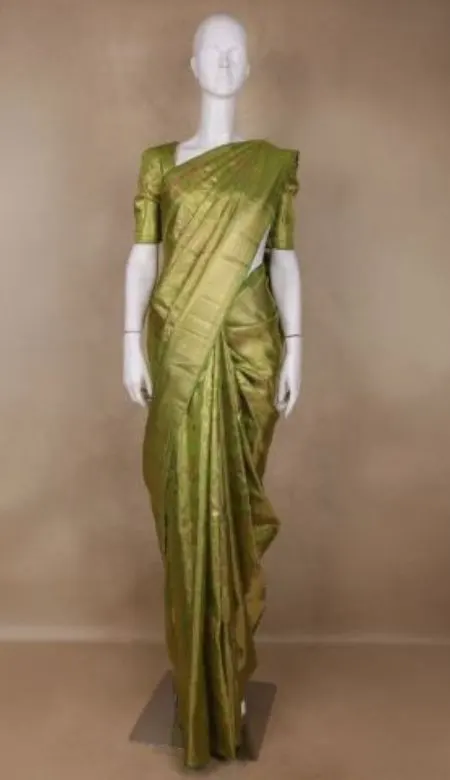
This is the second most costly saree in the Diadem – Ashirah Sil, which costs Rs. 128,250. This saree has a woven floral motif, a matching green zari pallu, a zari border, and an olive green blouse.
3. Diadem – Ashirah Sil: Golden Pure Kanchipuram Tissue Silk Saree
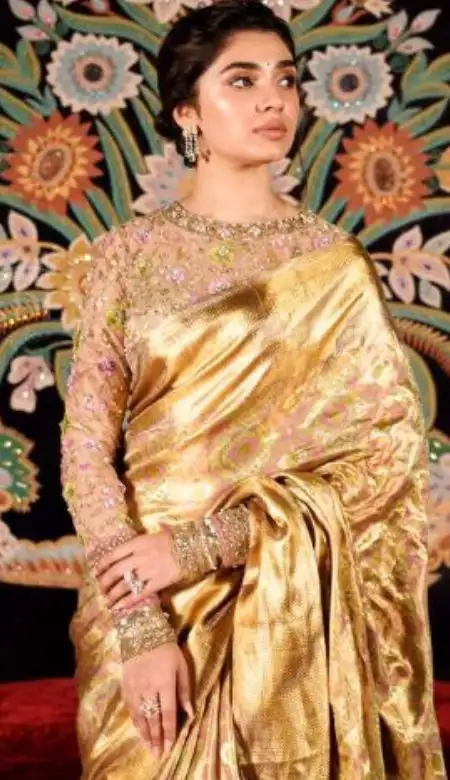
This Golden Pure Kanchipuram saree is for modern brides who want to shine in the modern days. It has pale green pallu borders covered with meticulously designed ornamental patterns and classic motifs, frames. The cost of the saree is Rs. 124,950. Additionally, you can wear this saree on muhurthams and at receptions.
4. Red Floral Embroidered Satin Bridal Designer Saree
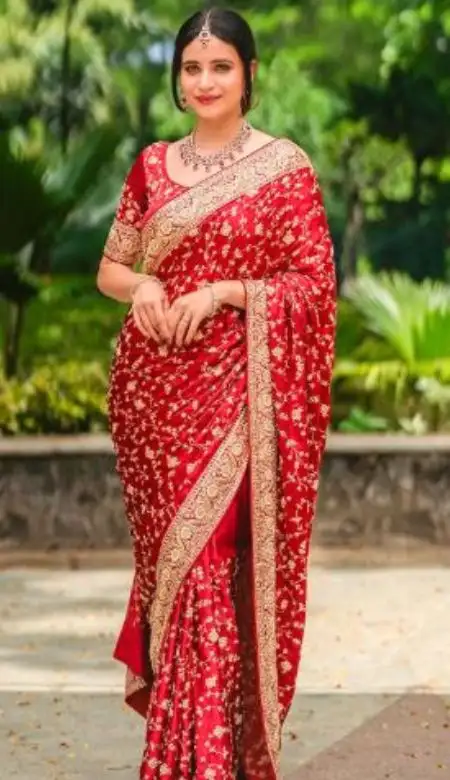
This saree is for party wear; it has a smooth, high-shine satin fabric with floral embroidery, a matching red blouse piece, and a matching red pallu, creating an excellent and striking look. The price of the Diadem – Ashirah Sil Red Floral Embroidered Satin Bridal Saree is Rs. 121,750.
5. Peacock Green Bridal Saree Zardosi Floral Design
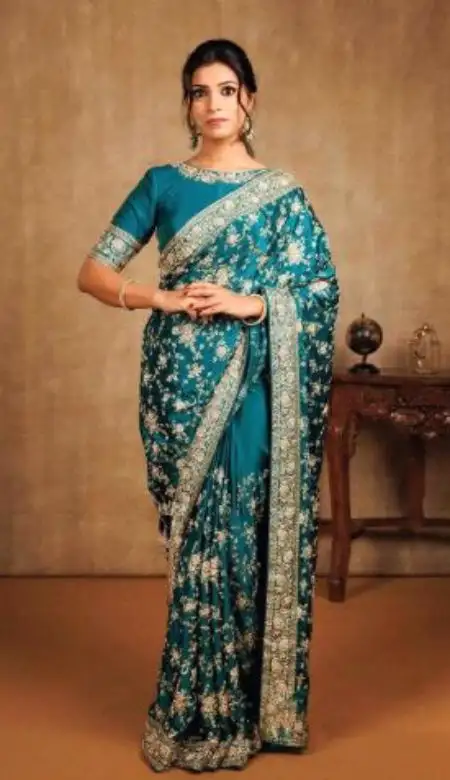
The Peacock Green Zardosi Floral Design Saree costs Rs. 109,950, which is the 5th most costly saree in the list. Therefore, Diadem Designers create a bridal wear saree, which features peacock green-coloured satin fabric that makes the saree outstanding in weddings and festive celebrations.